
When we talk about Reconciliation and decolonization in nonprofit or organizational spaces, I’ve noticed that the conversation often gets stuck and often focuses at surface-level actions—things like hiring an Elder, displaying Indigenous artwork, or incorporating cultural practices into programming. While these steps are integral and meaningful, I’ve come to realize in some cases, if they happen without deeper systemic change, they can unintentionally cause more harm.
In my experience, many organizations may not be aware that they operate within deeply colonial systems—or they’re unsure how to do things differently, or may even feel uncomfortable changing the way things have “always been done.” for a lot of reasons.
Colonialism isn’t just a part of history—it’s a living structure that shapes how we govern, make decisions, define success, and interact with each other. It’s like the water we swim in. David Foster Wallace shares an allegory that has always stuck with me:
Two young fish are swimming along and meet an older fish swimming the other way. The older fish nods and says, “Morning, boys. How’s the water?” The two young fish swim on for a bit, and eventually one looks at the other and says, “What the hell is water?”
The point, as he explains, is that the most obvious and important realities are often the hardest to see AND talk about. If we don’t recognize the “water” we are in, Reconciliation risks becoming performative, and Indigenization can drift into tokenism.
How I’ve Seen Colonialism Show Up in Organizations
Over time, I’ve noticed that colonialism in organizational systems often hides in the practices we consider “normal” or “best practice.”
1. Governance Models
Many nonprofits follow hierarchical governance structures based on Western corporate systems—boards at the top, executive directors below, and staff at the bottom. Community or the people you exist to serve and support aren’t even in the structure.
Why this can be challenging:
These models often prioritize control and efficiency over relational accountability and community consensus.
Decision-making tends to be fast-paced and majority-rule, leaving little space for community-led dialogue.
Power is usually concentrated in a small group—often non-Indigenous—reinforcing existing colonial dynamics.
What I’ve seen help:
Exploring shared leadership models, consensus-based decision-making, and governance structures where community voices are genuine partners.
2. Funding Structures
Funding is one of the most colonial aspects of nonprofit work. Most funders require rigid reporting, standardized metrics, and short timelines.
Why this can be challenging:
Success is often measured in numbers: participants, outputs, cost per outcome.
Indigenous and community-led approaches often value trust, healing, and relationships, which are harder to quantify.
Short funding cycles push organizations toward “quick wins” instead of long-term transformation.
What I’ve seen help:
Advocating for flexible funding agreements where communities can define success, and encouraging funders to value relational and cultural outcomes as legitimate measures.
3. Policies and Procedures
Policies are often presented as neutral, but in my experience, they reflect Western norms of professionalism and control.
Why this can be challenging:
HR policies may enforce rigid work hours, dress codes, or communication styles that conflict with Indigenous or Non-Western practices.
Conflict resolution often prioritizes speed and documentation over relational repair. One truth. Facts. Not experiences.
Risk management can unintentionally restrict cultural practices like smudging or ceremony often under the guise of safety or liability. I’ve heard a lot of stories and faced many a liability argument.
What I’ve seen help:
Rewriting policies to embed cultural safety, relational accountability, and flexibility—for example, making space for ceremonial practices and HR processes that prioritize dialogue.
Rethinking “Fairness”
I’ve also noticed that many organizations equate fairness with treating everyone the same. On the surface, that seems reasonable—but in practice, it reinforces existing inequities.
The current system already privileges certain groups because of historical and structural advantages. Treating everyone “equally” ignores these disparities and maintains the status quo. In my experience, true fairness requires equity, not equality—sometimes – often- that means redistributing resources to those who’ve been historically excluded, even if it feels uncomfortable.
Indigenization vs. Decolonization
I’ve also learned that while Indigenization—adding Indigenous voices, hiring Elders, incorporating cultural practices—is absolutely imperative and important, it can unintentionally become tokenism if underlying systems remain colonial. Racism in structures and in relationships subject folk to more harm.
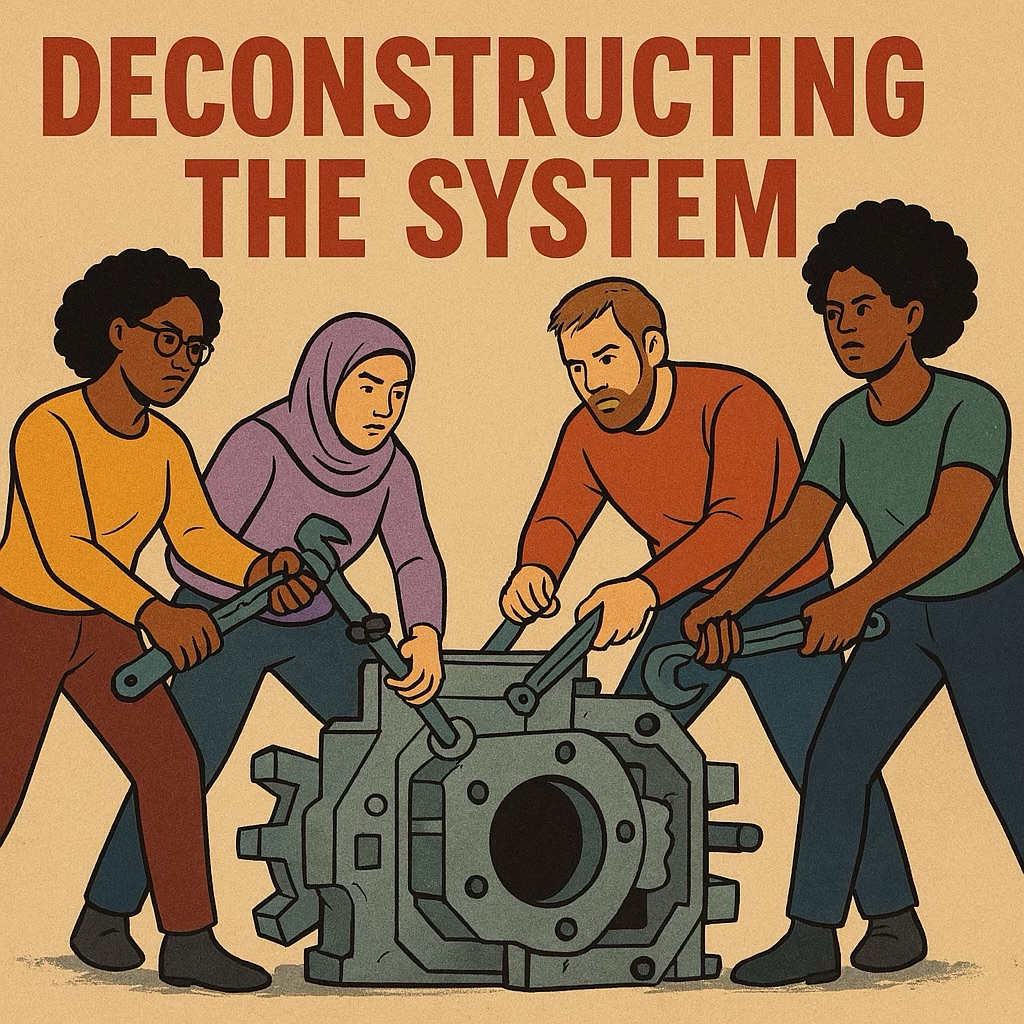
Decolonization asks us to rethink the structures themselves:
Why do we believe our way is “the right” way?
Who benefits most from the systems we uphold?
How do our policies reinforce power imbalances?
Indigenization without decolonization risks assimilation. Decolonization is about shifting the foundations, not just adding elements to the existing framework.
Reflections and Next Steps
These are just my observations and reflections from working alongside organizations trying to do this work. I’ve found value in:
Critical Reflection – Asking how colonial thinking shows up in our organizations.
Power Shifts – Moving decision-making closer to community – be transparent. Be accountable.
Policy Transformation – Embedding cultural safety and relational accountability, critically analyze your policies.
Funding Advocacy – Pushing for flexibility and community-defined outcomes and evaluation measures and methods.
Continuous Learning – Recognizing that decolonization is an ongoing process, not a checklist.
I share these thoughts humbly, knowing that I’m still learning and unlearning myself.
I’d love to hear how others have experienced this work in their organizations.
How are you navigating these conversations or challenges?
 Resurgence Consulting & Counselling
Leave a comment